When Allergies Turn Dangerous: From Hives to Anaphylaxis in Dogs and Cats
A pet who seemed perfectly comfortable only moments earlier can suddenly start swelling around the face, pawing at itchy skin, or showing alarming changes in breathing. Moments like these leave many families trying to make sense of whether they are seeing something serious that requires emergency care. Allergic reactions cover a wide range of severity, and the early signs are not always easy to interpret, especially when they appear without a clear trigger. Having a grounded understanding of what might be unfolding helps owners act quickly and confidently when every minute matters.
At Mission Veterinary Clinic in Granada Hills, our AAHA-accredited team is equipped to evaluate allergic reactions of all kinds with on-site diagnostic services that guide timely decision-making. Because we operate on a triage-based walk-in system that prioritizes life-saving care, pets showing sudden swelling, breathing changes, or fast-progressing symptoms are seen according to urgency, not arrival time. If a reaction begins to escalate, our medical team is available to provide same-day direction and support, and families can always reach us through our contact page before heading in.
What Triggers Allergic Reactions in Dogs and Cats?
The immune system protects your pet from threats, but it can overreact to harmless substances like pollen or certain foods. When that happens, the body creates symptoms that range from itchy skin to trouble breathing.
Common triggers include environmental allergens (pollen, dust mites, mold), insect bites or stings (especially fleas), some food proteins (such as chicken or beef), and occasionally medications or vaccines. Flea saliva is a frequent cause of intense itching.
Knowing your pet’s likely exposures helps you spot patterns early. Our team works with families to identify triggers and build practical prevention plans.
Hives vs. Anaphylaxis: How Reactions Differ
Not all allergic reactions look or act the same, and timing matters.
- Hives are raised, itchy welts and usually indicate a localized reaction. They’re uncomfortable but typically not dangerous.
- Respiratory allergies often show up as sneezing, coughing, or watery eyes and tend to progress slowly.
- Anaphylaxis in dogs and anaphylaxis in cats is a severe, whole-body reaction. It can cause a sudden drop in blood pressure, narrowed airways, and poor oxygen delivery to organs. This can develop within minutes and needs immediate emergency care.
If symptoms appear quickly and involve more than one system (skin, gut, breathing), treat it as urgent.
Warning Signs You Should Never Ignore
Recognizing red flags helps you act fast and protect your pet.
Common allergy symptoms:
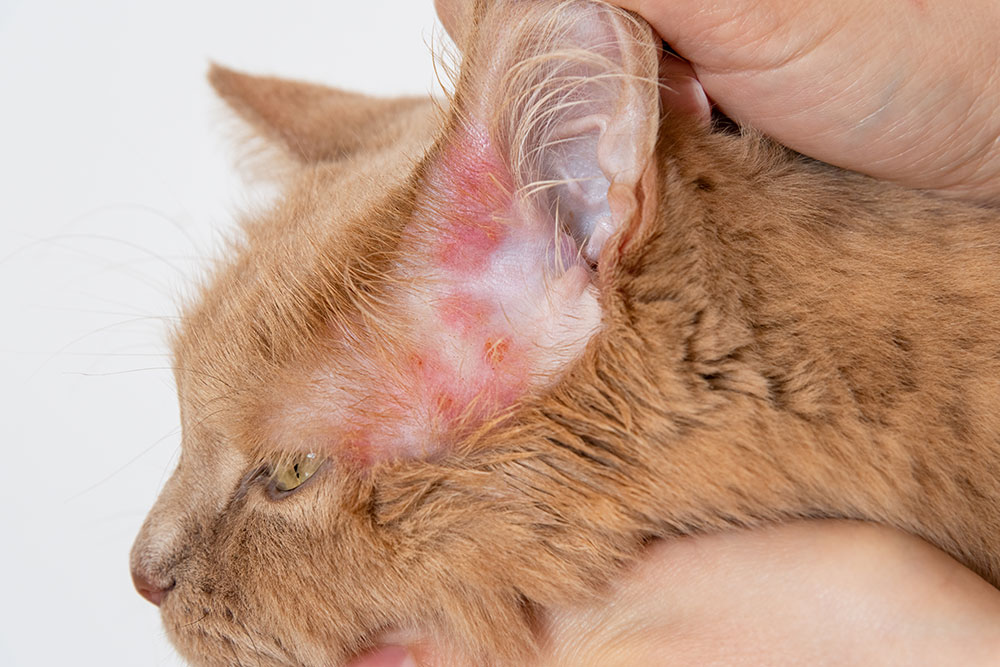
- Facial swelling around the eyes, muzzle, or ears
- Red, watery eyes or squinting
- Sudden, intense itching; licking or scratching
- Raised welts or bumps
- Vomiting or diarrhea soon after exposure
- Restlessness or behavior changes
Emergency symptoms that need urgent care:
- Trouble breathing, rapid shallow breaths, or gasping
- Open-mouth breathing in cats, which signals distress
- Collapse, or extreme weakness
- Severe swelling of the throat or tongue
- Persistent vomiting or diarrhea for more than an hour
- Pale or blue gums
- Weak or racing pulse
Breathing issues or signs of shock always require immediate attention. Our triage system ensures urgent cases are seen right away.
What To Do at Home During a Reaction
Your calm, quick steps can help limit the reaction.
Remove the suspected allergen. If it’s on the skin, rinse with cool water. Skip soaps unless your vet advises them.
- Keep your pet calm and still. Activity can spread allergens faster through the body.
- Prevent self-trauma. If scratching is intense, use an Elizabethan collar to reduce skin damage.
- Document details. Note when symptoms started, recent foods or products, and how signs change. Photos of swelling or skin changes can help your vet.
- Avoid human medications unless your vet says it’s safe. Some antihistamines can help, but dosing varies widely and certain ingredients are toxic to pets.
When Does It Become an Emergency?
Seek emergency care immediately if your pet has:
- Worsening breathing over minutes
- Rapidly spreading swelling, especially on the face or neck
- Multiple symptoms at once (skin, gut, breathing)
- Collapse or severe weakness
- Symptoms that continue despite removing the allergen
At Mission Veterinary Clinic, life-threatening presentations are assessed right away. Treatment may include medications to calm the immune response, reduce inflammation, support circulation, help breathing, and- for severe anaphylaxis- epinephrine. Most mild reactions resolve quickly with care, while severe cases may need close monitoring, sometimes overnight. Our facility provides intensive support when needed.
Preventing Future Reactions
Prevention focuses on reducing exposure and catching changes early.
- Regular grooming helps remove pollen and dust from the coat. Even simple weekly rinses can lower allergen load.
- Parasite control is essential. Flea allergy dermatitis can be triggered by a single bite. Maintain year-round parasite prevention, especially in our mild climate.
- Build consistent routines. Regular coat checks and paying attention to appetite, energy, and bathroom habits help you spot early changes.
- Some pets with severe reactions, especially to triggers like insect stings, may benefit from having epi-pens at home for emergency use.
- Testing for environmental allergy triggers, by use of blood or intra-dermal skin testing, and then providing immunotherapy may help decrease reactions for some pets
- Medications like Apoquel and Cytopoint help to decrease itching due to allergies; while they won’t stop allergies from occurring, they can make your pet more comfortable when they do happen.
Can Diet and Environment Help Reduce Flare-Ups?
Yes. Targeted changes at home can make a big difference.
- Food allergies: Work with your vet on an elimination diet using novel or hydrolyzed proteins. These trials usually last 8–12 weeks with no extras besides the prescribed food and water. Improvement on the trial and return of symptoms when the old diet resumes suggests a food allergy.
- Environmental management: Use HEPA vacuums to trap small particles, wash bedding weekly in hot water, and keep humidity between 30–50% to limit mold.
- Regular bathing: Using topical anti-itch therapies with omega fatty acids can improve skin condition and prevent severe skin reactions
- Ear care: Allergies often affect the ears. Routine ear cleaning with vet-approved solutions helps prevent infections.
Our diagnostic services include allergy assessments and elimination diet support to help identify triggers and build sustainable plans.

Reactions to Vaccines and Medications
While uncommon, reactions can happen and should be monitored.
- Vaccination reactions range from mild tiredness or soreness to more serious responses. Most appear within hours; some can develop up to 48 hours later.
- Some pets with a prior reaction may benefit from pre-medication with antihistamines, but this is case-by-case.
- Watch closely for two days after new vaccines or medications. Call us if you see vomiting, diarrhea, facial swelling, trouble breathing, or collapse.
Sharing your pet’s full history with our team helps us tailor schedules and reduce risk while keeping preventive care on track.
FAQs: Quick Answers for Pet Owners
What’s the difference between hives and anaphylaxis?
Hives are itchy skin welts and usually mild. Anaphylaxis is a sudden whole-body reaction that can be life-threatening and needs immediate care.
When should I go to the emergency vet?
Go right away if your pet has breathing trouble, severe swelling of the face or throat, collapse, pale gums, or persistent vomiting/diarrhea.
Can I give my pet an antihistamine at home?
Don’t give human medications without guidance. Some are safe at specific doses, but others are dangerous to pets. Call us first. If your pet regularly has allergic reactions, make sure to know the dose and medication type best for your pet so you can provide it promptly.
How can I prevent flea-related allergies?
Keep your pet on year-round parasite prevention and check for fleas regularly. Learn more about flea allergy dermatitis.
Could my pet have a food allergy?
Possibly. Work with your vet on an elimination diet using novel or hydrolyzed proteins for 8–12 weeks. If symptoms improve, then return when the old diet is reintroduced, a food allergy is likely.
Your Pet’s Safety Is Our Priority
Allergic reactions deserve quick attention, whether they cause mild skin irritation or life-threatening anaphylaxis. Watch for rapidly spreading facial swelling, worsening breathing, collapse, and persistent vomiting. Fast action gives your pet the best chance at recovery.
We know how stressful these moments are, and we’re here to help- both for urgent needs and long-term management. Our AAHA accreditation reflects our commitment to high standards, and our triage-based system ensures urgent cases receive priority care.
If your pet shows signs of an allergic reaction or you’re worried about sensitivities, contact us right away. We’re ready to provide same-day guidance, emergency stabilization, and ongoing support. Schedule a visit or reach out with questions- Mission Veterinary Clinic is your partner in keeping your pet safe and comfortable.









Leave A Comment