
Small Space, Big Cat Energy: How to Keep Apartment Cats Thriving
There’s something wonderful about the sound of your cat padding around the apartment investigating your counters, batting around toys, and claiming sunny spots. But when you live in a smaller space, you might find yourself constantly rearranging furniture to fit that massive cat tree, or playing the daily game of “where did they hide the mess this time?” because the litter box location wasn’t quite up to their standards.
If this sounds familiar, you’re not alone. The good news? The key to a happy apartment cat isn’t having a mansion- it’s about creating a rich, safe environment that works with their natural instincts, even in a compact footprint. Indoor cats are clever creatures who can absolutely thrive when their humans provide thoughtful enrichment and understand what makes them tick. The trick is tapping into those instincts so your cat feels like they have endless territory to explore, even in 800 square feet.
If managing your cat’s environment feels overwhelming, or if you’ve noticed behavior changes that concern you, it’s worth remembering that behavioral shifts can often signal an underlying medical issue. At Mission Veterinary Clinic in Granada Hills, we support you and your cat with everything from wellness care and diagnostics to practical behavioral advice and emergencies when needed. Our team is here to help you provide the best possible life for your cat, whether that means optimizing their litter box setup or investigating a health concern. Contact us to schedule an appointment and get personalized recommendations for helping your cat feel safe and fulfilled at home.
What Do Indoor Cats Need to Thrive in an Apartment?
Indoor cats do beautifully when their needs for safety, territory, and play are met consistently- and you can absolutely accomplish this with smart use of space and steady routines rather than square footage.
Think in layers: floor space, window views, and vertical pathways all count as territory to your cat. Rotate activities and toys so boredom never sets in. Keep resources predictable- food, litter, resting spots, and quiet hideaways should all have reliable locations.
Indoor cats are remarkably adaptable when their environment is designed around who they actually are. Practical changes to keep your indoor cat happy start with enrichment and consistent caregiving. Understanding the unique needs of indoor cats helps you provide safe outlets for climbing, scratching, hunting, and hiding- all the things that make a cat feel like a cat.
Regular preventive checkups at Mission Veterinary Clinic can catch early medical issues that often masquerade as behavioral problems. Our wellness care supports your cat through every life stage.
What Is Your Cat Trying to Tell You?
The most helpful approach is watching the whole cat, not just the tail. Relaxed bodies signal comfort, while hissing, hiding, or bathroom changes can signal stress or pain.
Signs of a calm, content cat: Soft eyes, slow blinking, gentle purring, that classic loaf position, and relaxed grooming sessions.
Signs of stress or discomfort: Flattened ears, a tucked or rapidly swishing tail, hiding, tense posture, and avoiding interaction or certain areas.
Signs of curiosity: Forward ears, sniffing, a slow and deliberate approach, and a tail held up with a little curve at the end.
Purrs, chirps, and body posture are all part of your cat’s feline language. If you’re unsure what you’re seeing, this guide to cat body language can help you decode the signals. Many cat behavior problems are actually your cat’s way of saying “I need more space” or “something hurts”- including overgrooming, inappropriate scratching, or excessive vocalizing. Many common cat behavior issues improve with environmental changes and, when needed, medical evaluation.
At Mission Veterinary Clinic, we evaluate behavior changes through a medical lens first, because pain and illness can look a lot like “attitude.” Our team listens closely to your concerns and can guide stress management strategies that actually work in apartment life.
How Do You Set Up the Perfect Litter Box in an Apartment?
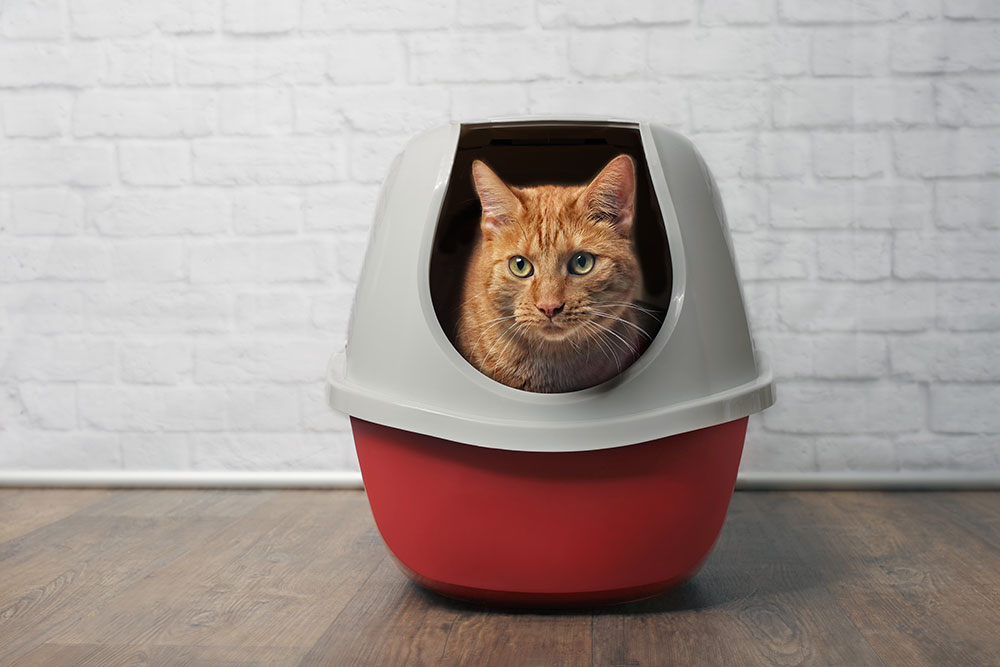
For most homes, the winning formula is one box per cat plus one extra, with large boxes, unscented clumping litter, and quiet, accessible locations- kept clean with daily scooping.
Size matters: Aim for boxes at least one and a half times your cat’s body length. Yes, that’s bigger than most boxes sold in stores.
Location matters: Place boxes in low-traffic areas away from food and water. Cats want privacy, but they also want escape routes- avoid dead-end corners where they might feel trapped.
Litter preference matters: Most cats prefer unscented, fine-grained clumping litter. Scoop daily and do a full wash weekly. You may need to experiment with litter types to find your cat’s personal preference.
For quick wins, start with these cat litter box tips and adapt them to your space. Covered boxes can trap odors and stress some cats- try high-sided, uncovered bins to reduce litter scatter without blocking airflow. In multi-cat apartments, spread boxes across different rooms or corners to prevent one cat from guarding resources. If your senior cat hesitates at the box, low-entry options and softer litter can ease mobility challenges linked to older cats behavior problems.
When bathroom habits change suddenly, a medical issue like urinary discomfort or gastrointestinal upset may be the cause. Our clinicians use targeted diagnostics- from urinalysis to imaging- to rule out health concerns, and our services include urgent care when litter box problems point to pain or blockage. In some cases, stress can actually cause lower urinary tract disease in cats. If your cat is straining, vocalizing in the box, or unable to urinate, seek care immediately- urinary blockages are life-threatening. For non-urgent concerns, contact us to discuss the best next steps.
How Can Vertical Space Transform a Small Apartment for Cats?
Cats feel most secure when they can survey their territory from above. Building vertical pathways with shelves, trees, and window perches expands their world without eating up precious floor space.
Offer at least one high perch in each room where your cat spends time. Create clear routes both up and down so your cat never feels trapped at the top. Place perches near windows with secure screens and sun protection for the ultimate cat TV experience.
Modern cat furniture and floating shelves can turn blank walls into a highway of exploration. For inspiration on placement and layout, browse creative catification ideas that make clever use of corners and alcoves. If your cat enjoys fresh air, consider secure catios or window enclosures that protect against falls and wildlife while offering breezes and sunshine.
Here in Granada Hills, warm, dry spells can tempt you to leave windows open. Make sure screens are sturdy and latches are cat-proof to prevent escapes or falls. Our clinicians include environmental safety in preventive conversations, and our wellness care offers practical guidance for making apartments truly cat-friendly.
What Does Good Daily Enrichment Look Like in a Small Space?
The best enrichment routine focuses on short, frequent play sessions with variety- rotating toys weekly and mixing food puzzles with interactive games to keep indoor cats content and fit.
Aim for 10 to 15 minute play bursts two to three times a day. Cycle toys in and out of rotation so they feel “new” again (store extras out of sight between rotations). Combine food puzzles with mealtime to slow eating and channel mental energy.
You can craft simple enrichment toys from things you already have around the house, or invest in puzzle feeders for daily mental workouts. Window perches with bird feeders can keep a cat entertained for hours. Tailor games to the natural hunting behaviour of cats: stalk, chase, pounce, capture. If you use laser pointers, always end the session with a tangible toy or treat so your cat gets the satisfaction of a “catch.” A sprinkle of catnip can make training and play even more rewarding, but not every cat is into it.
When enrichment falls flat and your cat just isn’t interested, pain, dental disease, or anxiety may be dampening their drive to play. Our clinicians can help you adjust plans compassionately- reach out to us to talk through behavior or wellness needs.
How Do Nutrition and Training Fit Into Apartment Cat Life?
Supporting good behavior means pairing balanced nutrition with positive training- choosing high-quality diets, rewarding with treats strategically, and practicing stress-free handling at home.
A thoughtful feeding plan starts with your cat’s age, weight, and activity level. Consider whether wet or dry cat food (or a combination) suits your routine and your cat’s hydration needs. And yes, you absolutely can train a cat– keep sessions short and positive for skills like sitting on cue, getting comfortable in the carrier, and polite mealtime behavior. Incorporating cooperative care for cats makes grooming and vet visits calmer for everyone, while also providing brain stimulation.
Apartment cats often get fewer spontaneous workouts than outdoor cats, so calories and portion sizes really matter. If you’re struggling with picky eating or weight management, our medical team provides nutritional consultations, and our services include tailored plans supported by diagnostics when needed. For ongoing questions or support with training and handling at home, contact us and our team will guide you step by step.
How Do You Keep the Peace in Close Quarters?
The most reliable way to maintain calm in a small home is leaning on predictable routines, safe retreats, and clearly defined resource zones- so every cat (or your single cat) always has options for alone time and privacy.
Common apartment stressors include limited territory, noise from neighbors or the street, and too few hiding places. Reviewing feline life stressors can help you spot trouble early. Red flags include overgrooming, sudden aggression, or changes in bathroom habits. Offer multiple scratching options to protect furniture and give your cat healthy outlets for marking, using strategies that address destructive scratching constructively. Keeping feeding, play, and rest on a steady schedule provides psychological safety that helps cats relax.
If tension builds between cats, or your solo cat becomes clingy or withdrawn, a medical check is a wise first step. Our clinicians approach behavior with a whole-cat strategy, starting with a health assessment and layering in practical environmental changes. Reach out to us to discuss behavioral consultations or environmental wellness planning tailored to your space and schedule.
When Does Cat Behavior Signal a Medical Problem?
As a general rule, sudden changes are medical until proven otherwise. Straining to urinate, repeated vomiting, hiding more than usual, or rapid breathing should all prompt a prompt evaluation.
Call us right away if you notice:
- Straining to urinate, visiting the box repeatedly with little result, or no urine produced at all
- Blood in urine or stool, vomiting more than once in a day, or sudden lethargy
- Open-mouth breathing, fast breathing while resting, or collapse
- Signs of severe pain: yowling, aggression when touched, or persistent hiding
How Stress Can Trigger Real Health Problems in Cats
Here’s something important to understand: stress doesn’t just affect your cat’s mood- it can actually cause or worsen physical illness. Cats are particularly sensitive to environmental changes, and chronic stress suppresses their immune system in measurable ways.
Feline idiopathic cystitis (FIC) is one of the clearest examples. This painful bladder condition causes many of the same symptoms as a urinary tract infection- frequent trips to the litter box, straining, blood in urine, crying while urinating- but it’s triggered by stress rather than bacteria. Cats with FIC often flare during household changes, conflicts with other pets, or disruptions to their routine. Treatment involves both medical management and environmental modifications to reduce stress.
Stress also makes cats more vulnerable to infectious disease. Feline upper respiratory infections can flare or become more severe when a cat’s immune system is compromised by chronic anxiety. A cat who seems to get “colds” repeatedly may actually be dealing with underlying stress that’s preventing full recovery.
This connection between stress and physical illness is one reason we take behavioral changes seriously. A cat who’s hiding more, eating less, or seems “off” may be experiencing stress that’s already affecting their health- or may be hiding pain from an emerging condition. Either way, early evaluation helps us intervene before things escalate.
Mission Veterinary Clinic is an AAHA-accredited hospital in Granada Hills providing urgent and emergency care for cats. Our triage-based walk-in system prioritizes life-saving treatment, with advanced diagnostics, respiratory and oxygen therapy, surgical support, and extended overnight care when needed. For non-emergent concerns- including behavioral changes that worry you- contact us so we can guide next steps and help your cat feel better sooner.
Your Partner in Helping Apartment Cats Thrive
A small home can feel expansive to a cat when it offers clean, well-placed litter boxes, vertical routes to explore, and daily play that satisfies the hunter within. Add in nutrition that fits your cat’s needs, gentle positive training, and predictable routines, and you have a recipe for calm, confident indoor living- no matter your square footage.
Our clinicians partner with you to customize these pieces for your specific space and your cat’s unique personality, from enrichment strategies to medical care when something isn’t quite right.
If you’re ready to fine-tune your cat’s apartment life, our team is here with practical, judgment-free guidance. Schedule a visit for wellness care or ask about behavioral assessments and environment design that works in real apartments with real constraints. Have questions or want personalized recommendations? Contact us and let us help your cat thrive at home.








Leave A Comment