Brushing, Wipes, and Gels: Finding the Home Dental Routine That Sticks
Walking down the dental aisle of any pet store can be its own kind of overwhelming. Brushes, gels, chews, treats, water additives, and special diets all promise healthier teeth, fresher breath, and a happier pet. The truth is that consistent home care really does make a meaningful difference for your pet’s long-term oral health, but the best routine isn’t always the most elaborate one. It’s the one you’ll actually keep up with.
Mission Veterinary Clinic in Granada Hills has served the San Fernando Valley for over 20 years as an AAHA-accredited practice offering comprehensive care, including routine wellness, dentistry, and around-the-clock emergency services. Our services cover the full range of dental needs, from cleanings and exams to addressing the more advanced disease that home care alone cannot fix. Reach out to us to discuss a dental consultation or to talk through building a home routine that fits your pet.
Why Does Daily Plaque Control Matter for Your Pet?
Periodontal disease starts the moment plaque, a soft layer of bacteria, settles onto tooth surfaces. Left undisturbed, it mineralizes into tartar within days. Tartar irritates the gum tissue, triggering inflammation that progresses from early gingivitis to deeper periodontal infection involving bone loss, painful tooth root exposure, and eventually tooth loss.
What makes this especially worth preventing is the systemic reach. Bacteria from advanced periodontal disease can enter the bloodstream and have been linked to changes in kidney, liver, and cardiac tissue over time. Daily or near-daily home care disrupts plaque before it hardens, slowing this progression meaningfully between professional appointments.
Home care extends the benefit of professional dental cleanings but does not replace them. Think of it as protecting the investment of each cleaning by maintaining what the procedure accomplished. Most pets benefit from professional cleanings every 1 to 2 years, with smaller breeds and many cats often needing them more frequently.
Brushing: The Most Effective Option
Why Mechanical Cleaning Beats Everything Else
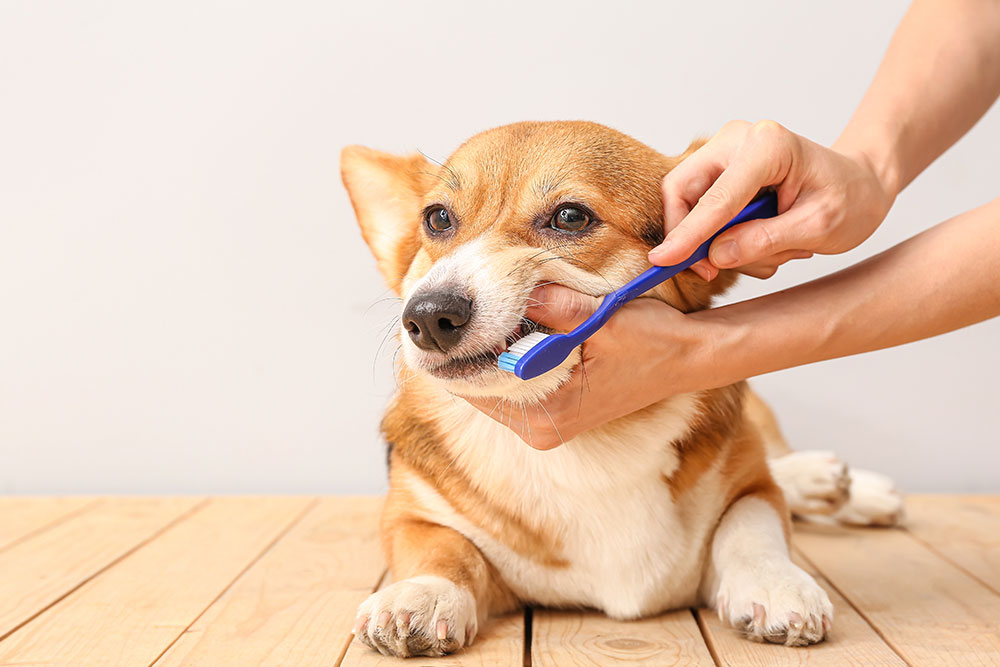
Toothbrushing physically disrupts the bacterial biofilm before it can mineralize. No other home care method matches it for effectiveness when done consistently. Daily brushing provides the highest level of protection; every-other-day brushing still delivers real benefit. Consistency over perfection is the right mindset.
How Do You Introduce Brushing Without a Fight?
The introduction is where most home brushing routines succeed or fail. Rushing the process creates negative associations that are very difficult to reverse. A patient, gradual approach works much better.
A sensible progression:
- Spend a few days touching the muzzle and gently lifting the lips, offering a reward after each brief session
- Run a finger along the outer tooth surfaces and gumline so the sensation becomes familiar
- Introduce a small amount of pet-safe toothpaste on the fingertip and let them taste it
- Move to a finger brush or soft-bristled toothbrush, starting at the front teeth only
- Gradually extend further back over the following days or weeks
Cooperative care techniques emphasize consent and positive reinforcement throughout the process, keeping sessions short enough to end before your pet becomes resistant. Starter kits like the Virbac CET oral hygiene kits bundle together a toothbrush, finger brush, and enzymatic toothpaste in flavors most pets accept readily, which simplifies the early learning phase considerably.
Critical safety rule: Never use human toothpaste. Fluoride and xylitol are both toxic to pets and can cause emergency presentations. Use only enzymatic or pet-formulated products specifically made for dogs and cats.
Proper Brushing Technique
For brushing dog teeth, hold the brush at a 45-degree angle toward the gumline and use short circular or gentle back-and-forth strokes, focusing especially on the upper back teeth where tartar accumulates fastest. Working from the back of one side forward and repeating on the other side keeps the process systematic. Outer surfaces are the highest priority; the tongue naturally helps clean inner surfaces with saliva.
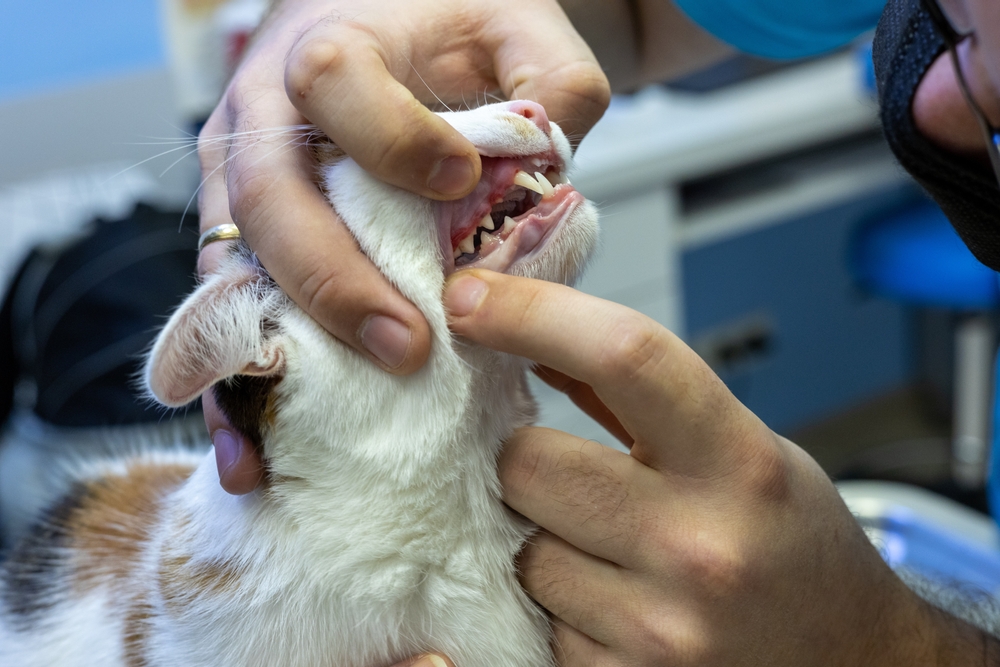
For brushing cat teeth, smaller brushes, lighter pressure, and shorter sessions distributed through the day tend to work better than one extended attempt. Cats are often more tolerant in positions where they feel stable rather than restrained. Brief sessions paired with positive reinforcement consistently outperform longer, forceful attempts.
If you’d like hands-on guidance, our team at Mission Veterinary Clinic is happy to walk you through brushing technique during a dental or wellness visit.
When Brushing Isn’t an Option
Some pets simply will not accept a toothbrush. Pet personality, age at introduction, and prior negative experiences all factor in. The good news: brushing isn’t the only effective option.
Dental Wipes and Gauze
Dental wipes or gauze wrapped around a finger provide friction-based plaque removal for pets who genuinely will not tolerate a brush. They clean accessible outer surfaces effectively and are better than doing nothing. Products like HealthyMouth wipes and Vetradent dental wipes pair antimicrobial ingredients with mechanical cleaning, which gives them an edge over plain gauze.
Wipes don’t reach gumlines or back molars as well as a brush, but used consistently and paired with an enzymatic product, they provide meaningful benefit. For some pets and households, wipes are the realistic long-term solution rather than a stepping stone. The honest assessment matters: a wipes-based routine done daily is far more valuable than a brushing routine done occasionally.
Enzymatic Gels, Powders, and Pastes
Enzymatic products work chemically by targeting bacterial biofilm without requiring physical scrubbing. Products containing lactoperoxidase or glucose oxidase enzyme systems can be applied with a finger, with a brush, by spray, or simply allowed to coat the teeth after your pet licks the product from your hand.
Many require no rinsing. They provide a meaningful layer of protection even for pets who only tolerate minimal contact, and they enhance the effectiveness of any brushing that does occur. Sprinkle-on options like ProDen PlaqueOff Powder work through the food itself by altering the chemistry that allows tartar to bond to the tooth, which makes them appealing for pets who reject anything applied directly to their mouths.
Combining enzymatic options with wipes or brushing produces better outcomes than either approach alone.
Water Additives and Oral Rinses
Water additives deliver antimicrobial or enzymatic ingredients passively through drinking. They are the most hands-off option and can supplement care for pets who resist anything applied directly to their mouths. TropiClean Fresh Breath and Bluestem Water Additive are two widely available options.
Effectiveness varies considerably by product, and additives cannot remove tartar that has already formed. Introduce them gradually at a low concentration to ensure your pet continues drinking normally. Some pets are sensitive to taste or smell changes in their water and may reduce intake; this is a meaningful concern in cats, where adequate hydration is important for kidney health.
Dental Diets and Their Role in Plaque Reduction
Dental diets are formulated with a larger kibble structure that requires teeth to penetrate before the food crumbles, producing mild abrasive cleaning with every bite. Some formulations also include ingredients that bind calcium and reduce tartar mineralization.
Like all home care tools, dental diets extend the interval between professional cleanings rather than eliminating the need for them. They work best as part of a layered approach, and we can help you decide during a wellness exam whether transitioning to a dental diet would meaningfully benefit your pet.
Chews and Toys That Contribute to Oral Health
What Is the Critical Safety Rule for Pet Dental Chews?
Chewing action physically scrapes plaque from tooth surfaces, and the right chew can meaningfully contribute to home care when selected carefully. The critical safety rule: if pressing your thumbnail into the chew doesn’t leave a dent, it is too hard and risks cracking teeth.
Dangerous chew items include:
- Antlers (deer, elk, etc.)
- Hooves
- Hard nylon products (some Nylabone varieties)
- Real bones, raw or cooked
- Rocks, ice cubes, hard plastic toys
Tooth fractures from inappropriate chews are one of the most common preventable dental problems we see. The damage often doesn’t show externally; the dog continues chewing, eating, and acting normally while a fractured tooth root develops infection that eventually requires extraction or root canal. Fractured teeth from chewing on the wrong toy are one of the most common dental conditions we see through our urgent care services.
Choosing Safe and Effective Dental Chews
Safe chew toys flex or compress under pressure. Well-designed dental chew toys with textured surfaces that reach between teeth contribute genuine plaque removal when used regularly. They can be coated in enzymatic toothpaste for an extra benefit.
Edible dental chews provide both mechanical removal of plaque and enzymatic action when chosen carefully. For dogs, widely available options include Greenies, OraVet Dental Hygiene Chews (which include an ingredient that helps prevent plaque from sticking to teeth), Purina DentaLife, Virbac VeggieDent, grain-free options like Whimzees, and Pedigree Dentastix. For cats, Feline Greenies, Purina DentaLife cat treats, and Whiskas Dentabites are commonly used to add a daily dental component to feeding routines.
Match the chew size to your pet’s weight range as listed on the packaging (too-small chews are choking and obstruction hazards), always supervise initial sessions with any new product, and monitor for gastrointestinal upset if your pet is prone to sensitive digestion.
What Does the VOHC Seal Tell You About a Product?
The dental care market is crowded with products making broad claims. VOHC-accepted products carry a seal from the Veterinary Oral Health Council, an independent organization that reviews clinical trial data before granting recognition. Only products that demonstrate measurable plaque or tartar reduction in controlled studies earn the seal.
The absence of a VOHC seal doesn’t automatically disqualify a product, but its presence gives you reliable confidence that what’s on the label reflects what the product actually does. Look for the seal when evaluating dental chews, water additives, diets, gels, and wipes. We can also help you interpret labels and select products appropriate for your pet’s age, breed, and current oral health status.
What Professional Cleanings Do That Home Care Cannot
Even the most diligent home care has limits. Tartar that has already hardened onto teeth cannot be removed at home, regardless of how consistent the routine. Neither can subgingival disease, the infection and bone loss that occurs below the gumline where it is not visible or accessible without anesthesia.
Anesthesia-free dental risks are worth knowing: procedures done without anesthesia can only address visible surfaces and provide no access to subgingival areas or the diagnostic imaging that reveals root and bone pathology. They create the appearance of cleaner teeth while leaving the most clinically significant disease untouched.
Proper anesthesia, with full monitoring, pre-anesthetic bloodwork, and dental radiography, allows the entire mouth to be cleaned and evaluated tooth by tooth. We provide complete dental cleanings at Mission Veterinary Clinic, and because we also offer urgent and emergency services, we’re equipped to address dental complications, fractured teeth, mouth injuries, and severe periodontal disease whenever they come up. Whether your pet needs a routine cleaning, a follow-up on something concerning, or care for a sudden dental issue, we can handle the whole picture under one roof.
How Do You Make a Dental Routine Actually Happen?
The most effective dental routine is the one that fits into real life. Pairing dental care with an existing daily habit, such as the last thing before bed or immediately after the evening meal, dramatically improves consistency.
Practical strategies that work:
- Keep supplies visible so they’re easy to reach, not buried in a drawer
- Set a reminder on your phone if needed during the building-the-habit phase
- Involve all household members so the routine holds even when schedules vary
- Track informally through breath quality, gum color, and visible tartar between vet visits
- Combine products on different days: brushing one night, dental chew the next, enzymatic gel another night
Practical troubleshooting:
- If your pet resists a toothbrush, back up to a finger brush or wipes and rebuild tolerance gradually
- If time is genuinely limited, even 30 seconds of enzymatic gel applied to the gumline daily is worth doing
- If you’ve just adopted an older pet with poor dental health, get professional evaluation before starting home care
- If your pet seems painful when you touch their face or mouth, stop the home care attempt and get them seen
Any consistent home care effort is producing benefit, even when it doesn’t look like a perfect routine.
Warning Signs That Need Veterinary Attention
Some dental presentations warrant prompt evaluation:
- Severe bad breath that’s noticeably worse than usual
- Visible swelling of the face or jaw
- Bleeding gums beyond the occasional spot
- Difficulty eating or dropping food
- Pawing at the face
- Visible tartar that’s heavily covering teeth
- Loose, broken, or discolored teeth
- Discharge from a tooth or surrounding gum
Mission Veterinary Clinic is here for both routine dental care and the more urgent dental issues that need quick attention. Give us a call and we’ll help you figure out the right next step for your pet.
Frequently Asked Questions About Home Dental Care
How often should I brush my pet’s teeth?
Daily is ideal. Every other day still provides substantial benefit. Twice a week is the minimum frequency that produces measurable results.
My pet hates having their mouth touched. Where do I start?
Back up further than you think you need to. Start with just touching the muzzle and lips with no toothbrush involved, paired with treats. Build up to brief gum touches over a week or two before introducing any product or brush. The slow approach gets to consistent brushing faster than the fast approach.
Are dental treats enough on their own?
Generally not, but they’re a useful component of a layered approach. They work best combined with at least some direct mechanical or enzymatic care.
Can I use baking soda or salt water for my pet’s teeth?
Don’t. Baking soda contains too much sodium and can be harmful when swallowed in any quantity. Salt water can disrupt the oral microbiome. Stick to products formulated for pets.
What if my pet’s mouth seems painful?
Stop home care attempts and schedule an evaluation. Painful mouths often indicate active disease that needs professional intervention before home care can be effective.
Your Partner in Lifelong Dental Health
Home dental care is the connective tissue between professional cleanings, and consistency matters more than perfection. Whether your routine is a full daily brushing or a combination of wipes, dental chews, enzymatic products, and dental diets, what matters is that something is happening regularly to disrupt plaque before it becomes painful disease.
Mission Veterinary Clinic is here for the full arc of your pet’s dental health, from coaching you through a home routine that actually works, to providing thorough professional cleanings, to handling the urgent issues that occasionally come up. Ask us your dental questions at your next visit. Your pet’s mouth is one of the easiest parts of their long-term health to protect, and we’re glad to help you do it.









Leave A Comment