The exam is over, the chart reads body condition score 7 out of 9, and what that number means is simple: your dog or cat is overweight. The scale runs from 1 to 9, and every bracket means something specific: 1 through 3 is too thin, 4 and 5 is the healthy zone, and 6 through 9 climbs from overweight into obesity. Each point above 5 represents real extra fat, the kind that strains joints and shortens lives, so that number deserves attention without deserving panic. The way back down is steady and unglamorous: feed for the weight your pet should be rather than the weight they are, measure every meal and treat, and trim gradually.
Mission Veterinary Clinic has been fielding weight questions from San Fernando Valley families for more than 20 years, and we see the consequences of pet obesity every day through our 24/7 emergency and urgent care services. Diabetes, ruptured cruciate ligaments, spinal disease, and heatstroke are all either caused by or made worse by extra weight on your pet’s frame. During comprehensive wellness care visits for dogs and cats in Granada Hills, we grade your pet’s body condition, show you where they sit on the 9-point scale, and set a portion target built around their ideal weight. If you’re worried your pet’s weight will turn into an emergency visit, or want to see where they currently sit on the scale, give us a call.
Body Condition Score: Quick Facts
- A body condition score reads your dog or cat on a 1-to-9 scale, where 4 to 5 sits in the healthy zone and anything from 6 up means extra fat that strains joints and shortens lives.
- The reading on the bathroom scale can hide the truth, because two pets at the very same weight often carry wildly different amounts of muscle and fat.
- Portion control does most of the work in weight loss, so measuring every meal and treat matters more than one heroic walk around the block.
- Slow and steady wins, since crash diets tend to snap back, and cats especially can develop a dangerous liver condition when they drop weight too fast.
Why Isn’t the Number on the Scale Enough to Judge My Pet’s Health?
The scale gives you one figure, but it can’t separate muscle from fat, and that split is the whole story of a pet’s health. Two dogs at 60 pounds can look nothing alike: one lean and athletic, the other soft and round.
A dog or cat can hold steady on the scale for months while trading lean muscle for fat underneath the coat. Build matters too. A Greyhound is meant to show ribs that a Bulldog never would, and breed-standard looks don’t always line up with what keeps joints comfortable and life long. The better questions are how your pet moves, how easily they jump onto the couch, and how they feel under your hands.
How Do I Score My Pet’s Body Condition at Home?
Scoring is a hands-on check that takes about a minute. Look down at your standing pet from above and hunt for a waist that dips in behind the ribs. Then crouch to the side and watch for a belly that tucks up toward the hips. Finally, run both hands along the rib cage.
The nine-point body condition scoring scale turns “a little chubby” into a number you can track. On an ideal pet, the ribs feel like the back of your hand: easy to find with a light touch, not buried and not jutting out.
| Score | Category | What you see and feel |
| 1 to 3 | Underweight | Ribs, spine, and hip bones stand out with little fat over them, and muscle looks wasted |
| 4 to 5 | Ideal | Ribs found easily without pressing, a clear waist behind the ribs, belly tucked up from the side |
| 6 to 7 | Overweight | Ribs take real pressure to feel, the waist is fading, the belly starts to sag |
| 8 to 9 | Obese | Ribs can’t be felt, no waist at all, heavy fat over the back, tail base, and belly |
Do this check monthly, and be extra patient with thick coats, since a Persian or a Golden can hide a size change under all that fur. If you’re not sure where your pet lands, ask us at your next visit and we’ll walk you through the feel of it in person.
What’s Extra Weight Really Costing My Pet?
The bill lands in two places: the extra food and treats that quietly add up to hundreds of dollars a year, and the diseases that follow obesity. Pet families want to give the best, and sometimes love shows up as one more biscuit.
Extra fat pushes a pet toward diabetes, which can mean twice-daily insulin injections and monitoring for the rest of that dog or cat’s life. Add arthritis that needs long-term medication and back trouble that can end in surgery, and the yearly total climbs fast. Keeping your pet lean is one of the cheapest, most powerful moves you can make for their comfort and your budget, and the obesity-related conditions we manage are far easier to head off than to reverse.
Which Health Problems Does Obesity Cause?
Carrying extra fat raises the risk of a whole cluster of health problems at once. Fat isn’t passive padding. It behaves like an active organ, releasing signals that inflame tissue and make the heart work harder.
The added weight quietly raises the stakes across the board:
- Heart and blood pressure: More body tissue means more vessels for the heart to supply, which can lift blood pressure and strain the pump over the years.
- Joint disease: Arthritis, soft tissue injuries like cruciate ligament ruptures, and intervertebral disc disease (a painful back condition that can turn into emergency surgery) can be caused or made worse by extra pounds.
- Overheating: A thick fat layer traps heat, so heavier pets tire and overheat faster on warm Granada Hills afternoons.
- Endocrine and organ disease: Diabetes, hepatic lipidosis in cats, pancreatitis, and even bladder stones are all more likely in overweight pets.
- Anesthesia: Excess fat makes sedation trickier to dose and procedures longer, which matters any time your pet needs an operation.
- Breathing: Fat around the chest crowds the lungs, and flat-faced breeds like Bulldogs and Persians labor even more.
- Lifespan: Study after study shows lean pets simply live longer, often by a year or more.
For a pet who’s already sore, our team pairs weight loss with arthritis and long-term pain management, since shedding pounds is one of the most effective ways to quiet aching joints.
What If My Pet Is Too Thin Instead?
Underweight pets face their own troubles: too little body reserve weakens the immune system, makes it hard to stay warm, and eats into the muscle a pet needs to move well. Healing from illness, injury, or surgery slows down too. A score of 1 to 3 deserves a workup just as much as a high one, because the body is telling us something is off.
How Much Should I Be Feeding My Pet?
Working out how much to feed starts from the weight your pet should be, not the number showing today. Their breed, age, current body condition score, activity level, spay or neuter status, and health conditions all influence the calculation.
An online calorie calculator gives you a solid starting point, and then every calorie has to count: the training treats, the dental chew, the bite of cheese that hides the pill, and the crust off the toast. A kitchen scale or a proper measuring cup beats eyeballing, which nearly always drifts into overfeeding.
Is a Prescription Weight Diet Worth It Over a Store-Bought “Light” Formula?
Not all weight foods are built the same, which makes choosing the right food more than a label-reading exercise. A prescription weight-loss diet is put through feeding trials to prove it burns fat while protecting muscle mass, a step most over-the-counter “light” formulas skip. Those prescription options also lean on higher fiber to help a hungry pet feel full on fewer calories. For a pet with a lot to lose or another illness in the mix, they deliver predictable results under veterinary watch, and our team will help you choose one and keep the refills simple.
What Does Safe, Lasting Weight Loss Look Like?
Safe weight loss is a marathon, not a sprint, aiming for a gentle drop of roughly 1 to 2 percent of body weight each week. The routine that fits your household is the one that holds up over the long months it takes.
- For dogs: Helping a dog lose weight usually comes down to longer daily walks and meals measured to the gram.
- For cats: Helping a cat slim down leans on measured meals, short bursts of wand-toy play, and a pace gentle enough to keep the liver safe. Cats need special care, because cutting calories too fast can trigger hepatic lipidosis, a life-threatening liver disease.
- Make food a project: Puzzle feeders, food-dispensing toys, and kibble scattered across a snuffle mat turn dinner into a hunt that slows fast eaters and burns a few calories.
- Rethink the rewards: Trade calorie-dense chews for green beans, carrots, or a few pieces of the daily kibble set aside as treats.
- Weigh and adjust: Step on the scale every few weeks, and if the numbers stall for a full month, it’s time to trim the portions again.
Why Won’t My Pet Lose Weight No Matter What I Try?
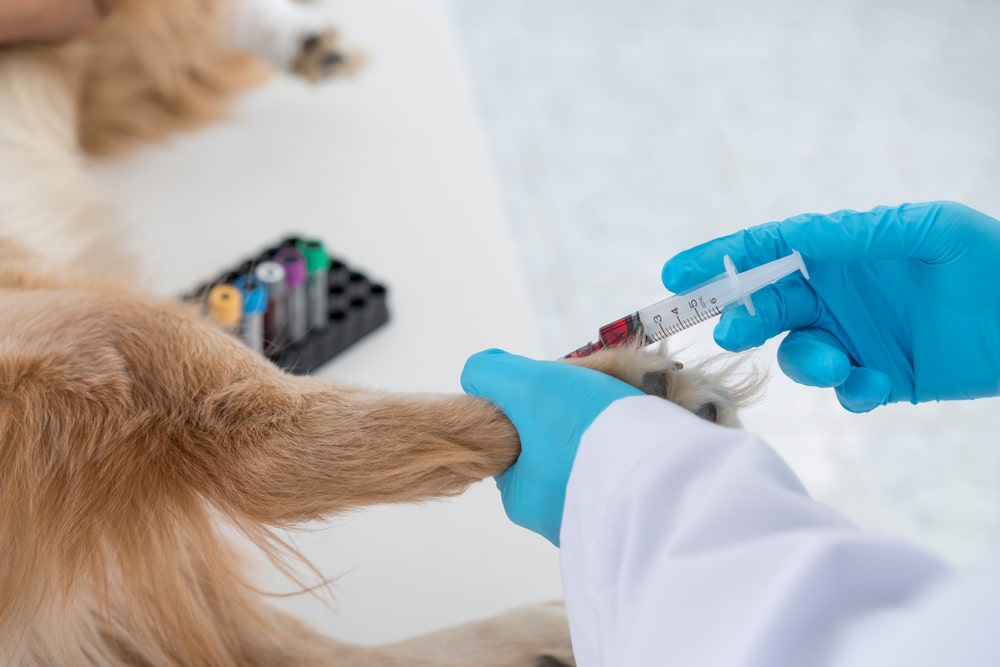
Sometimes the food is right and the weight still won’t move, and that usually points to a medical cause rather than a feeding one. In dogs, one of the most common causes is hypothyroidism, an underactive thyroid gland, which slows metabolism enough to drive steady gain on its own. Because these problems hide in the bloodstream, in-house bloodwork and urinalysis let us check thyroid, kidney, and blood sugar values during the same visit.
| Condition | More common in | What it does to weight |
| Hypothyroidism | Dogs | Slows metabolism and drives gradual gain |
| Cushing’s disease | Dogs | Raises cortisol, bringing a pot-bellied look and a bigger appetite |
| Arthritis and joint pain | Dogs and cats | Pain decreases movement, driving weight gain |
| Heart disease | Dogs | Fluid can back up into the abdomen, mimicking obesity |
How Often Should My Pet’s Body Condition Get Checked?
For most adult dogs and cats, twice a year is the sweet spot, which matches the exam rhythm we already suggest for catching disease early. Needs shift across a lifetime: puppies and kittens are growing fast, adults hold a steady line, and seniors can lose muscle even while fat creeps up.
An annual blood screen sets a baseline that makes later metabolic changes easy to spot. Our veterinary team can hold this year’s score against last year’s and fine-tune portions, diet, and activity before a small gain becomes a big one.
Weight Questions Pet Families Ask Us Most
My Pet Acts Starving All the Time. Am I Really Not Feeding Enough?
A bottomless appetite is usually behavior, not proof of true hunger. Many dogs and cats learn quickly that a hopeful stare earns a snack, and the routine sticks. As long as your pet holds an ideal body condition and eats the amount their calorie target calls for, they’re getting enough. Redirect the begging with a low-calorie treat, a short play session, or plain attention rather than another scoop of food.
How Do I Switch My Pet to a Weight-Loss Food Without Upsetting Their Stomach?
A new weight-loss food lands best as a gradual diet transition across a week or so, which keeps the stomach settled. Start with roughly a quarter new to three-quarters old, then shift the ratio every couple of days. If you notice soft stool or a skipped meal, slow the pace and give the gut time to catch up.
Can I Just Walk the Weight Off Instead of Changing the Food?
Exercise is wonderful for muscle, mood, and heart health, but it rarely moves the needle on its own. You simply can’t out-walk a bowl that’s filled too high, since portion control drives the large majority of any weight loss. Movement and measured meals together, kept up steadily, are what bring the score down and keep it there.
A Healthier Weight Is a Team Effort
A better body condition score means easier movement, fewer trips to see us for preventable problems, and more good years with your dog or cat. Saying no to a begging pet is genuinely hard, and you don’t have to figure the rest out alone. When you’re ready, reach out to start a plan with the Mission Veterinary Clinic team in Granada Hills, built around your pet, your schedule, and small steps you can actually keep.








Leave A Comment