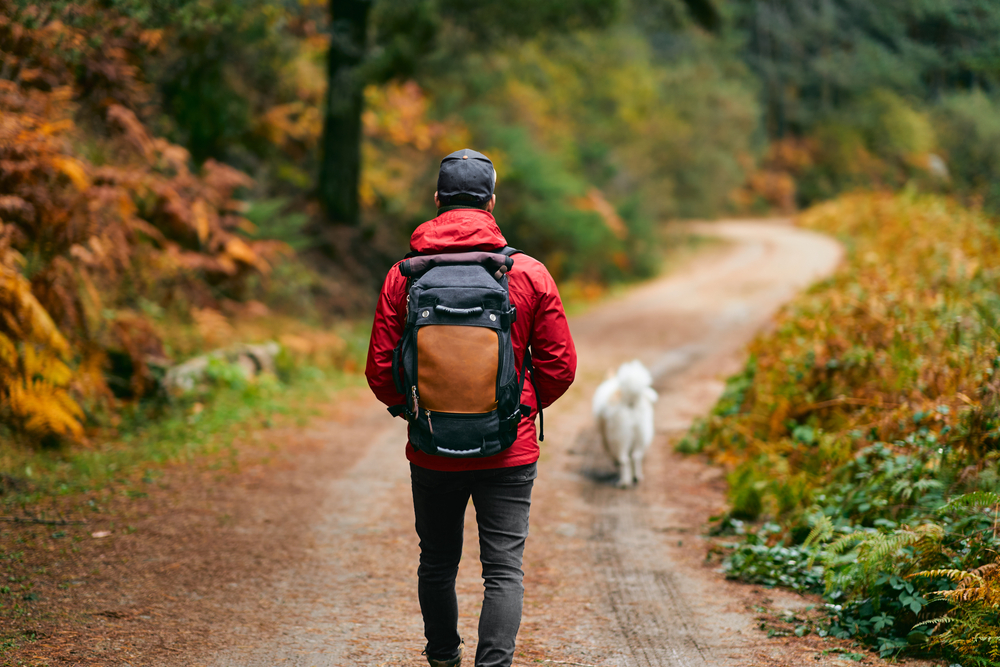
The trail hazards that actually hurt dogs are more varied than most hikers expect, and range from mild to full-blown emergency. Paw lacerations from sharp rock, foxtails that burrow into skin and ears, overheating on exposed terrain, snakebite, and soft-tissue injuries from steep descents fill our urgent care schedule through the warm months. Dogs make it harder by hiding pain, so a cut pad or early heat stress often goes unnoticed until you are back at the car. A few problems that look minor at the trailhead, like a deeply migrated foxtail or a pad that will not stop bleeding, genuinely need professional care that same day.
At Mission Veterinary Clinic in Granada Hills, we are equipped for the full range of trail trouble, from urgent injuries that need same-day attention to true emergencies like rattlesnake bites. We are an AAHA-accredited hospital offering both urgent and emergency care, open late with overnight care most days. Because we run on a walk-in, triage-based system, we ask that you call before coming so we can be ready for you and let you know if we are near capacity. If you are worried or not sure whether your dog needs to be seen, reach out to our team and we will help you figure out what warrants a visit.
Trail Hazards at a Glance
- Paws take the most hits: lacerations, foxtails, and torn nails are common.
- Heat is the most dangerous: it escalates fast, and Southern California’s dry heat adds real risk.
- Snakebite is a real Southern California threat: rattlesnakes warrant immediate care, and we carry antivenin for emergency treatment.
- Dogs hide trail pain: the injury that seemed fine at the trailhead often surfaces that night.
Which Trail Hazards Actually Send Dogs to Urgent Care?
The injuries we treat most from trail outings cluster into a few categories: paw and pad injuries, heat-related illness, soft-tissue strains and sprains from steep terrain, snakebite and wildlife encounters, and eye injuries or punctures from foxtails, cacti, or branches. Most need same-day attention, and a few are true emergencies, but none of them wait politely for a routine appointment.
What ties them together is that dogs rarely quit when they hurt. Watching for the common pet pain signs, like a reluctance to move, panting that will not slow, or a changed posture, helps you catch a problem on the trail instead of finding out at home, when it has had hours to get worse.
How Do the Common Hazards Compare?
Matching each hazard to its likely injury and the right response makes the call easier on the trail.
| Trail hazard | Likely injury | What to do |
| Sharp rock and gravel | Paw laceration or abrasion | Wrap or put on a bootie, stop the hike, come in if deep |
| Foxtails, goatheads, and cactus spines | Embedded in paw, ear, skin, or nose | Remove if visible, see us if it has migrated |
| Exposed terrain in heat | Heat exhaustion or stroke | Cool the dog, head in, treat as urgent |
| Rattlesnakes and scorpions | Envenomation | Get the dog out fast, call us and come straight in |
| Steep descents | Strain, sprain, or torn ligament | Rest, come in if limping persists |
| Scavenged plants or carcasses | Toxin or foreign body | Call us or poison control |
| Water (lakes and rivers) | Toxic algae, drowning, injuries | Come straight in for urgent care |
The throughline is to stop early and assess, because pushing on almost always turns a small trail injury into a bigger one.
What Paw Hazards Are Most Common?
Paws are the single most common trail-injury site we see. Sharp rock and gravel cause lacerations and abrasions, hot rock burns pads, and barbed foxtails burrow between toes and migrate inward through late spring and fall. Goathead (puncturevine) seeds have thorns sharp enough to puncture bike tires and can cause serious pain when stepped on by your dog. Cactus spines can be picked up on feet or just by brushing against a cactus, and similar to foxtails, they burrow deeply and migrate.
Before the hike:
- Trim nails: good nail-trimming technique keeps claws short and prevents them from catching on roots and rock.
- Test the surface: protecting paws from heat starts with the back-of-the-hand test on rock and pavement. If you cannot hold it there for seven seconds, neither can your dog.
- Use foot protection: if you know you will be hiking on sharp rock or in foxtail-, cactus-, and goathead-heavy areas, use booties to protect the feet.
After the hike:
- Check for nail damage: a cracked or broken nail might be ignored while your dog is focused on the hike, but it is easily infected if it gets covered in trail dirt and your dog licks it. Any dangling nails or exposed quicks should be seen.
- Check for paw pad damage: ripped or scraped paw pads are painful and need cleaning to prevent infection. Large flaps or missing areas of paw pad may need suturing; if your dog is missing more than a dime-sized piece of pad, it is worth having it looked at.
- Check for foxtails, cactus spines, and goathead thorns: check between the toes and deep in the webbing, as well as around the ears and the rest of the coat. If you can see that a foxtail, spine, or thorn has embedded into the skin and you cannot easily remove it, come in for a visit.
If a paw injury happens on the trail:
- For a bleeding nail, styptic powder in your kit stops it fast.
- For a pad cut, a bootie protects the pad for the walk out, but a deep cut needs same-day wound and laceration care rather than a bandage and hope.
- For embedded thorns, spines, and grass awns, use tweezers to pull out any visible material. Clean the area well, prevent licking, and come in if any swelling or discharge develops. If the thorn is embedded more than a half inch, or you are not sure you removed all of it, come in.
Why Is Heat the Most Dangerous Trail Hazard?
Heat causes the trail emergencies that escalate fastest, and Southern California’s dry heat fools plenty of hikers into underestimating it. Dogs die every year from overheating while out on Los Angeles and Orange County trails.
Heat safety on the trail means planning around temperature, so start at dawn or after sunset in summer, carry generous water, break in shade, and watch for the early signs. Heavy panting that will not slow, bright red gums, and drooling can progress to collapse within half an hour. Cool a hot dog with cool, not ice-cold, water on the belly and paws and head in; early-to-moderate heat stress is exactly what we treat same-day. Brachycephalic, senior, overweight, or heart-compromised dogs cross the danger line sooner than a young, fit dog.
What Wildlife and Snakebite Risks Should You Watch?
The Southern California area puts dogs in range of rattlesnakes, coyotes, skunks, mountain lions, and bears. Knowing what to do if you encounter a wild animal is half the battle, and the other half is reading your dog.
Coyotes are active across the region and bears appear on many trails, so keep dogs close. Mountain lions are a rare but real presence on local trails, and Los Angeles County’s guidance on wildlife encounters is worth reviewing before you head out. Picking up canine body language, like a sudden alert posture or a hard stare, often flags wildlife before you spot it yourself. Any wildlife encounter resulting in a scratch or bite warrants a rabies booster and possibly antibiotics or even surgery. A skunk encounter is usually more smelly than dangerous, but the spray can badly irritate the eyes, and because skunks can carry rabies and sometimes bite a cornered dog, a spray to the face or any bite is worth a call to us.
Rattlesnakes are a serious concern: keep dogs leashed in snake habitat, stay on cleared trails, consider aversion training, and if a bite happens, carry your dog to the car, call us, and come straight in, because envenomation can deteriorate fast. We carry rattlesnake antivenin and treat these cases during our open hours, so calling ahead lets us prepare before you arrive. Southern California is home to multiple types of rattlesnakes; if you can take a photo of the snake safely and very quickly, do so, but do not try to catch it and bring it along for ID.
Scorpion stings, while relatively rare, can be serious. The Arizona Bark Scorpion can be found in the Southern California area, and a sting can cause severe pain, respiratory distress, gastrointestinal symptoms, and tremors. Try to grab a photo of the scorpion for ID if possible, and seek care immediately if your pet has been stung.
What Plant and Insect Hazards Are On The Trail?
A few quieter hazards still drive visits:
- Toxic and dangerous plants: Southern California has a number of toxic plants or plants that cause serious skin reactions on the trails, including poison oak, poodle-dog bush, hemlock, stinging nettles, jimson weed, and mushrooms; if you see your dog eat a plant, try to remove as much as you can from their mouth, take photos of the leaves and stems, and call Pet Poison Control. If you need a plant ID, poison control may refer you to a Facebook group staffed by plant ID experts, where you can upload your images along with the necessary information and have the plant identified in minutes.
- Cactus spines can embed in feet, eyes, noses, or anywhere they make contact. Species like Jumping Cholla require only the slightest brush before you are stuck with an entire cactus arm dangling off you, so keep pets away from cacti and remove any spines promptly with tweezers.
- Foxtails are not only a paw problem; they can also be inhaled, lodged in ear canals, or caught under an eyelid where they cause painful corneal ulcers. Any sudden onset of sneezing, head shaking, or squinting deserves an urgent visit, and we have the equipment to remove foxtails from ears, noses, and eyes before they cause bigger problems.
- Venomous spiders: the black widow is the spider most likely to turn up around woodpiles, rock crevices, and trail debris in Southern California, and its bite can cause intense pain, muscle cramping, and restlessness; true recluse spiders are largely limited to inland desert areas. Watch closely after any suspected bite, and come in if you see swelling, weakness, or signs of pain.
- Africanized honey bees: established across the region, they swarm aggressively when a hive is disturbed, and because a dog cannot outrun them, the safest move is to give hives a wide berth and leave quickly if bees become agitated. Multiple stings, facial swelling, or trouble breathing means come in right away.
- Red imported fire ants: these deliver several burning stings at once when a dog disturbs a mound. A few stings usually just need watching, but a large number, or any swelling, hives, or weakness, warrants a visit.
- Tick prevention matters year-round, and a thorough check after every hike beats finding an attached tick days later. An attached tick is not an emergency, but if left attached, ticks can transmit Lyme, ehrlichia, anaplasma, and other diseases that can cause life-threatening symptoms.
What Orthopedic Injuries Can Happen From Trail Tumbles?
Steep descents, loose scree, and unexpected jumps off boulders are where the orthopedic injuries happen.
The most common injury is a simple strain or sprain: a dog who lands wrong off a boulder, twists a stifle, or pulls a muscle on a descent. Many resolve with a few days of rest, but limping that does not improve within 24 to 48 hours, or that keeps the dog off the leg entirely, needs to be seen, since a partial cruciate tear can look like a sprain at first.
Cruciate ligament tears are one of the most common orthopedic injuries we see, and trails are a frequent setting. A cranial cruciate ligament injury most often happens when a dog plants a hind leg and twists, exactly the kind of movement a sudden direction change on rocky terrain creates. Most dogs with a complete tear hold the leg up entirely, while a partial tear may just toe-touch. Treatment usually means TPLO surgery for medium and larger dogs, though smaller dogs and select cases may do well with conservative management.
Fractures are less common than soft-tissue injuries but happen with falls off rocks, ledges, or trail features. Broken bones in dogs tend to announce themselves: an audible crack at the moment of injury, refusal to bear any weight, visible deformity or shortening of the limb, and swelling that develops quickly rather than slowly. On the trail, stabilize and transport rather than trying to splint, since a poorly placed splint often does more harm than good. Keep the limb in whatever position is least painful and head in.
Mission Veterinary Clinic provides the orthopedic and fracture surgery these injuries call for, including TPLO and fracture repair with pinning, plating, and external fixation, so a serious trail injury does not have to mean a long drive to find help.
What Water Hazards Should You Watch For on the Trail?
Trails near lakes, rivers, and reservoirs add a category of water hazards worth knowing:
- Blue-green algae is the most dangerous, with toxins that can cause rapid liver failure or neurologic collapse after even a small ingestion or skin exposure. California lakes are monitored through the California Harmful Algal Bloom Tracking Program, and we strongly recommend checking the current advisory list before any water outing. There have already been thirteen harmful algal blooms reported in LA county between January and June of 2026\. If you see green scum, blue-green sheens, or floating mats on the water, keep your dog out regardless of whether the lake is currently listed.
- Fast-moving water is the next concern, since strong currents can pull even strong-swimming dogs under, particularly during spring runoff when rivers run higher and colder than they look.
- Submerged sticks, rocks, and logs are another underestimated hazard: a dog jumping into murky water can land on a sharp stick or break a leg on hidden rock, so do not let your dog leap into water you cannot see through.
Use life jackets for dogs in moving water or open water, avoid stagnant ponds, and discourage drinking from any water source you would not drink from yourself, since giardia and leptospirosis live in plenty of clear-looking water. After any swim, dry the ears thoroughly since trapped moisture is one of the most common causes of post-hike ear infections.
How Do You Lower the Odds Before You Go?
The dogs we see least after hikes belong to the hikers who prepared. Build fitness gradually over weeks rather than attempting a long hike with a couch potato, and pack with the trail dangers in mind. Follow local ordinances for leash laws, and keep an eye on the weather.
The gear that matters:
- A well-fitting harness or collar: head halters and harnesses that actually fit your dog’s behavior and body type prevent rubbing or accidental slips.
- A non-retractable leash, so you can maintain proper control.
- Protective booties, which serve as both prevention and coverage when a paw injury occurs.
- Water and a collapsible bowl, more than you think you need.
- ID and a small first aid kit.
- A life jacket, if you plan on swimming in deep or fast-moving water.
The prep that matters:
- Grooming: hair cut short around paws and ears prevents foxtail injuries, a properly groomed coat helps prevent heat stress, and nails trimmed short are less likely to snag.
- Exercise: build up to long hikes with short excursions and strength-building exercises to prevent injury.
- Training: solid recall, “drop it” or “leave it,” and “heel” alone can prevent a large number of accidents.
- Weight control: a lean dog handles heat and exercise better than an overweight dog.
- Regular wellness care: keep vaccinations up to date, use year-round parasite control, and make sure your dog has had a recent exam to rule out hidden heart, lung, or orthopedic problems that might cause trouble on the trail.
The skills that matter:
- A pet first aid class teaches trailside basics you cannot Google in the moment.
- A monthly at-home pet checkup gives you a baseline, so a post-hike change stands out instead of blending in.
When Should You Head Straight In?
Trail injuries fall on a spectrum, and Mission Veterinary Clinic is set up to handle all of it. The large middle ground, like the deep pad cut, the migrated foxtail, the limping dog, and the moderate heat stress, is everyday urgent care for us, while true emergencies like rattlesnake bites, major trauma, and toxin ingestion are handled here too.
Because we run a walk-in, triage-based system and occasionally reach capacity, calling before you come lets our team know you are on the way and tell you whether to head in or, in the rare case we are closed or full, point you to the nearest 24-hour emergency hospital.
Mission Veterinary Clinic is here for the range of urgent and emergency conditions that Granada Hills and San Fernando Valley dogs run into on the trail, from broken bones and TPLOs to foxtails, lacerations, and snakebite. If you are not sure whether what you are looking at needs a visit, just call us or come on in.
Frequently Asked Questions About Trail Injuries
What Temperature Is Too Hot to Hike?
For most dogs, 75 to 80 degrees with humidity is the upper limit for a sustained hike, especially on steep, exposed slopes; above that you want dawn or post-sunset outings only. Flat-faced breeds, seniors, and overweight dogs hit the line lower. Southern California’s dry summer heat can mask how hard a dog is working, so err toward earlier and shorter.
My Dog Is Limping After Our Hike. Should We Come In?
Mild limping that resolves with rest inside 24 hours can be watched, with a call to us if it does not improve. Limping that persists, any swelling, refusal to bear weight, or a visible injury means come in. We can evaluate and treat orthopedic injuries the same day rather than waiting for a routine slot.
What If I Think My Dog Was Bitten by a Rattlesnake?
Treat it as time-critical. Carry your dog rather than letting it walk if you can, to slow the spread of venom, and call us on the way so we can prepare the antivenin before you arrive. If we are closed or at capacity, head to the nearest 24-hour emergency hospital instead, because this is one trail hazard where minutes genuinely matter.
Trail Safety Built Into Every Outing
A safe trail day usually comes from preparing the unglamorous parts and knowing which hazards to respect: paws, heat, snakes, and the dog’s own habit of hiding pain. Most trail injuries are preventable, and the ones that happen are best handled by knowing exactly where to go.
If your dog has an injury that needs attention in the Granada Hills area today, contact us so we can triage and get you seen as quickly as possible, and know that the urgent and emergency care your dog needs is close to home.








Leave A Comment