
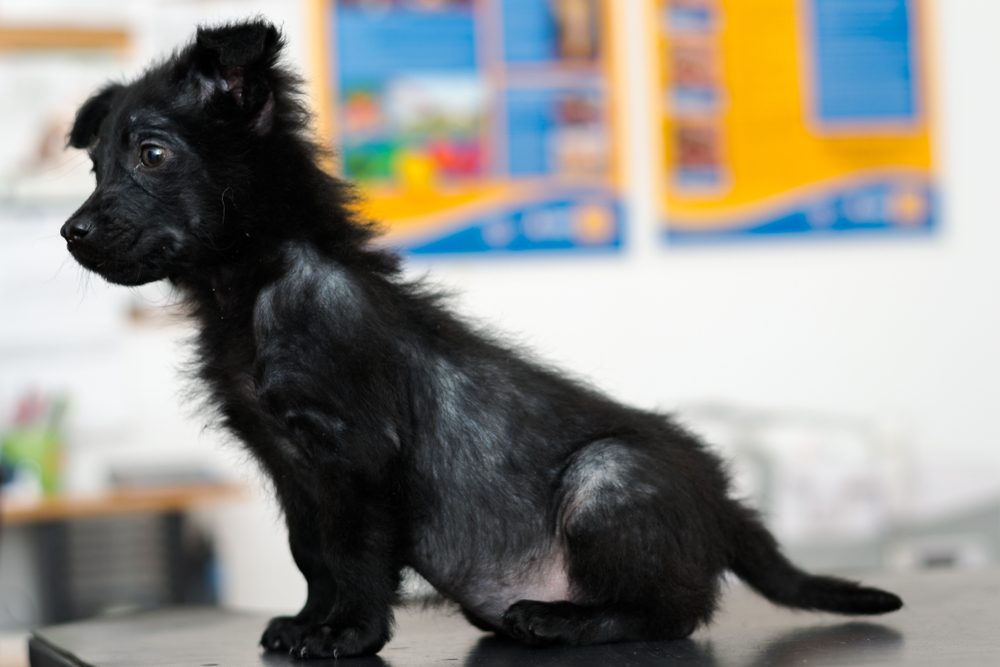
Most hair loss in dogs and cats is not an emergency, and the skin underneath the missing fur is what tells you how fast to act. A bald patch over calm, comfortable skin can wait for a scheduled exam, even though it still deserves one, since allergies, parasites, and hormone conditions all start quietly. Skin that turns hot, red, swollen, raw, or painful is a different story, and so is a patch spreading by the day or a pet who cannot leave one spot alone: those need urgent care rather than a slot on next week’s calendar. The middle ground, itching that keeps building or a smell coming off the coat, is worth a visit within a few days, before an infection digs in deeper.
At Mission Veterinary Clinic, an AAHA-accredited practice in Granada Hills, you never have to sit with that judgment call alone, because we are open 24 hours and triage urgent cases around the clock. Our dermatology care for dogs and cats starts with our in-house lab, samples taken from the affected areas, and allergy testing, so the cause gets a name before treatment does, and we see skin conditions in pets every day, from common to complex. If your pet’s skin looks angry or a bald spot is growing, give us a call on your way in so we can be ready for you.
What a Bald Patch Is Telling You
- Hair loss over calm, comfortable skin can wait for a scheduled exam, while skin that is hot, raw, swollen, or spreading fast needs urgent care the same day.
- Itchy hair loss usually points toward allergies, parasites, or infection, and non-itchy symmetrical thinning points toward hormones.
- Cats and some dogs remove their own hair when they’re stressed or hurting, and the skin underneath can look completely normal.
- Nearly every cause is treatable once it’s named, and naming it takes samples and blood work rather than a look from across the room.
How Do I Know If Hair Loss Needs Urgent Care or Just an Appointment?
Read the skin, not the fur. Hair loss over skin that looks and feels normal is almost never urgent, while skin that is hot, swollen, oozing, or clearly painful needs to be seen today, and Mission Veterinary Clinic is open 24 hours for exactly that call. Here is how the timing usually sorts out:
- Come in now: Skin that is hot, swollen, oozing, or painful to touch, raw areas spreading by the hour, a pet who cannot stop chewing at one spot, facial swelling, or hair loss arriving with lethargy or a refusal to eat.
- Book within a few days: Itching that keeps building, circular or crusted patches, a sour smell off the coat, or scabbing along the neck and back, since infections and ringworm get harder to clear the longer they run.
- Schedule a routine exam: Slow, symmetrical thinning over calm skin, a coat gone dull, or a seasonal-looking shed that never refills. Not urgent, still worth answers.
Call before you come, since we triage walk-ins around the clock and can reach capacity.
Is This Normal Shedding or Something I Should Worry About?
Normal shedding thins the coat evenly, leaves calm skin behind, and picks up in spring and fall. What deserves a closer look is hair missing in patches, thinning that mirrors itself on both sides, skin that’s red, scaly, or greasy, or a bare spot that stays bare for weeks.
Alopecia is the medical term for hair loss, a symptom rather than a disease of its own, which is why the same bald patch can point in a dozen directions. A few signs are easy to miss:
- Barbering: Hair looks chewed or snapped off at an even length instead of missing from the root.
- Focused licking or scratching: Attention aimed at one area, especially paws, ears, flanks, or belly.
- Odor or pigment change: A smell coming off the coat, or skin that has darkened where the hair thinned.
Every exam we do includes a hands-on look at the skin, and we can usually separate a seasonal coat change from the skin and coat conditions that need treatment right there in the room.
Could Allergies Be Behind My Pet’s Bald Spots?
Allergies are one of the most common reasons dogs and cats lose hair. The immune system overreacts to something ordinary, the skin inflames, and the scratching, licking, and chewing that follow break the hair off. The bald spot is the damage, not the disease itself.
Southern California hands pets a long allergy season, and three trigger categories cover most of what we see:
- Environmental: Atopic dermatitis is a lifelong sensitivity to pollen, dust mites, and mold spores, and it shows up as relentless itching around the face, paws, ears, and belly long before the skin looks abnormal.
- Food: A dietary reaction tends to itch year-round instead of flaring with the seasons, and it often arrives alongside soft stool or a gassy gut.
- Fleas: Flea allergy dermatitis can be set off by a single bite, which matters in a climate where fleas stay active through the winter.
Dogs advertise their allergies with paw licking, repeat ear infections, and a face rubbed along the carpet. Cats keep it quieter, and a thinning belly, tiny scabs down the neck, or a bare strip on the inner thighs is often the first clue.
If the itch circles back every few months, an allergy workup beats treating each flare as its own event.
Can Mites, Fleas, or Infection Cause Hair to Fall Out?
Parasites and infections are behind a large share of the bald patches we see, and strictly indoor pets aren’t exempt. Several culprits are too small to spot without a microscope, and each takes a different treatment.
- Mites: Demodex mites live quietly in the follicles of most healthy dogs and only overgrow into patchy hair loss when the immune system is immature, stressed, or suppressed, which is why puppies see it most. Sarcoptic mange behaves the opposite way: fiercely itchy, contagious, and worst on ear margins, elbows, and belly.
- Fleas: An infestation causes hair loss the direct way, through scratching and chewing at the tail base and hind end. Consistent year-round prevention takes most flea-driven coat damage off the table.
- Bacteria and yeast: Inflamed skin lets normal surface organisms overgrow, and that secondary problem often drives more itch than whatever started it. Crusted bumps and rings of scale suggest bacteria, while a greasy coat with a musty smell points toward Malassezia yeast.
- Fungus: Despite the name, ringworm is a fungal infection, and its circular patches of broken hair spread readily to other pets and to the people in the house.
Telling these apart takes a sample rather than a guess, and skin scrapings and fungal cultures are how that question gets settled. Kittens, puppies, pets with hormonal conditions, and pets on immune-suppressing medication get checked most carefully, since their skin gives ground faster.
Why Is My Dog Thinning on Both Sides Without Any Itching?
Symmetrical thinning with no itch is the classic hormonal pattern. When hair fades evenly along both flanks, the trunk, and the tail while the skin stays calm, the problem usually sits in a gland rather than on the coat, and the shift creeps in slowly enough that months pass before anyone notices.
What Do Thyroid and Adrenal Problems Do to a Coat?
Thyroid and adrenal disorders change the coat by changing the hormones that tell hair follicles when to grow and when to rest.
- Hypothyroidism: An underactive thyroid thins a dog’s coat symmetrically along the trunk and tail while energy drops and weight creeps up, and the coat change is often what gets noticed first.
- Cushing’s disease: Too much cortisol produces a pot-bellied silhouette, thin skin that bruises easily, heavy drinking and urination, and hair that gives way over the body while the head and legs hold onto theirs.
- Feline hyperthyroidism: Cats have their own version, with fur that turns patchy and unkempt alongside weight loss despite a big appetite, restlessness, itching, and a voice that gets louder at odd hours.
Can Sex Hormones or My Own Medications Be Involved?
Both can. In intact male dogs, testicular tumors can produce enough estrogen to cause symmetrical hair loss along the flanks and belly, and neutering frequently resolves it. Intact females sometimes show similar flank thinning tied to their cycles.
Pets also absorb estrogen and testosterone from hormone replacement creams and gels through skin contact or licking, and the resulting pattern looks exactly like an internal gland problem. If anyone in the house uses a topical hormone product, tell us at the visit.
Why Does Routine Blood Work Matter for a Healthy Coat?
Hormone shifts register in the bloodstream well before the fur looks wrong, which is part of what a panel on a middle-aged dog or an older cat is screening for. Last year’s numbers turn a borderline result into a clear one.
Is Some Hair Loss Just Part of the Breed?
A handful of coat conditions are written into the genetics, and while those can’t be cured, they can be managed comfortably. Knowing a breed carries the tendency saves months of chasing a fix that was never coming.
| Condition | Who tends to get it | What it looks like | Managing it |
| Color dilution alopecia | Blue and fawn coats: Dobermans, Weimaraners, silver Labradors | Gradual thinning over dilute-colored areas, dry brittle hair, repeat follicle infections | Gentle skin care, fatty acid support, treating the infections that ride along |
| Seasonal flank alopecia | Boxers, Bulldogs, Airedales, Schnauzers | Symmetrical dark-edged bald patches over the flanks that come and go with the seasons | Often nothing at all; melatonin and longer light exposure help some dogs |
| Sebaceous adenitis | Standard Poodles, Akitas, Samoyeds | Silvery scale, dull brittle hair, a musty odor, loss along the topline | Oil soaks and medicated bathing on a long-term schedule |
| Zinc-responsive dermatosis | Huskies, Malamutes, fast-growing large-breed puppies | Crusty scaling around the eyes, muzzle, ears, and pressure points | Diet correction and zinc supplementation with guidance |
| Alopecia X | Pomeranians, Keeshonds, other plush-coated breeds | Woolly coat thins over the trunk and tail while the head and front legs stay furred | Purely cosmetic for most; melatonin or a hormone workup for some |
None of these get diagnosed on appearance alone. Mites, infection, and hormones come off the list first, and a skin biopsy sometimes settles the remaining question.
What If My Cat Is Pulling Her Own Hair Out?
Psychogenic alopecia leaves smooth, evenly thinned patches on the belly, inner thighs, or forelegs with calm skin underneath, because the hair is being removed by the tongue rather than lost to disease.
The trigger list is usually mundane: a move, a new baby, construction next door, or a litter box relocated somewhere less private. Most cats show no other sign; they just groom. Dogs run a different version, where repetitive licking of one spot, almost always a foreleg, thickens the skin into a raw plaque that gets harder to leave alone.
Pain is the piece most often missed: a cat with bladder inflammation grooms the belly bare, a dog with arthritic hips works over a hind leg, and a sore anal gland gets licked raw, all over skin that looks perfectly normal because whatever hurts sits underneath it. Our veterinarians rule out the physical causes first, since treating anxiety in a cat whose real trouble is a painful bladder loses weeks.
What Happens at a Hair Loss Visit, and How Is It Treated?
The appointment opens with questions, moves to a hands-on skin exam that maps where hair is missing, then goes to samples. Treatment waits for that answer on purpose, since clearing mites, calming an allergy, and correcting a hormone problem are three different plans.
The history does real work: when it started, whether the itch came before the hair loss, what your pet eats, and whether hormone creams are in use all narrow the list before a single test runs. Pattern narrows it further. Symmetrical and quiet leans hormonal, circular and crusted raises fungus, and bare from the elbows down means your pet is doing it with their mouth.
Skin cytology takes only minutes and tells us whether bacteria or yeast have overgrown, which changes the plan the same day. Scrapings look for mites, a fungal culture goes on when ringworm is on the table, and blood work with a thyroid or adrenal panel follows a hormonal pattern. The first answers usually come back during the same visit, and we build the treatment plan around them with you.
| If the cause is | Treatment usually involves | What follow-up looks like |
| Allergies | Anti-itch medication, medicated baths, omega-3 support, an elimination diet or allergy testing | Rechecks that adjust the plan as seasons and triggers shift |
| Parasites | Prescription treatment for every pet in the house, plus cleaning up the environment | A repeat check confirming the mites or fleas are gone |
| Bacterial or yeast infection | Oral or topical antimicrobials with medicated bathing on a set schedule | A recheck before stopping, since deep infections outlast the surface |
| Hormonal disease | Daily medication or surgery, depending on which gland is involved | Blood work to fine-tune the dose, with the coat lagging behind |
| Stress or pain grooming | Treating the painful problem first, then environmental changes and sometimes medication | Watching whether the licking eases as the real issue resolves |
Rechecks are the step families skip, and they’re where these cases get won.
Frequently Asked Questions About Hair Loss in Dogs and Cats
Is my pet’s hair loss contagious to me or my other pets?
Most of it isn’t. Allergies, hormonal disease, and breed-related coat conditions can’t be passed to anyone. The two that travel are ringworm and sarcoptic mange, and both move between pets and people, often showing up on human arms or waistlines as an itchy rash. If someone in the house has a new rash, mention it, because it changes what we look for first.
How long until the hair grows back once treatment starts?
Comfort returns first and the coat comes last. When the cause was allergic, parasitic, or infectious, the itching, redness, and odor ease well before the fur changes, and regrowth fills in over several weeks once the problem clears. Hormonal cases run slower, often taking three to six months before the coat looks like itself again. A patch that keeps widening, turns raw, or leaves your pet itchier than before deserves an early recheck rather than more waiting.
Can hair loss ever signal something serious?
Most of the time the trouble stops at the skin. Sometimes it doesn’t. Thinning that appears symmetrically without any itch can be the first outward sign of hypothyroidism, Cushing’s disease, feline hyperthyroidism, or a hormone-producing tumor, and each of those needs treatment for reasons that reach well past the coat. That’s why a workup for non-itchy loss includes blood work, and catching one of these early beats catching it late.
Getting Your Pet Comfortable and Their Coat Back
Hair loss is a symptom with a long list of causes, which is why guessing costs more time than testing. Scratching day and night, quietly working over one patch of belly, losing fur in a mirrored pattern without a single scratch: each of those points somewhere different, and the sample that tells us where takes minutes to collect.
Mission Veterinary Clinic in Granada Hills is open 24 hours, so if the coat has changed or the itch has settled in, reach out and let’s get a look at that skin.








Leave A Comment